Fascia, Mold Illness, Lyme & CIRS: The Missing Link in Healing
Fascia, Mold Illness, and CIRS: The Missing Link in Healing
When someone is healing from mold exposure or Chronic Inflammatory Response Syndrome (CIRS), the focus is often on detoxification, binders, antimicrobials, supplements, and protocols. But for many people, progress stalls or symptoms worsen when detox is pushed too quickly.
One often-overlooked reason for this is fascia.
Understanding fascia and supporting it gently can be a game-changer for healing from CIRS.
What Is Fascia?
Fascia is a continuous web of connective tissue that surrounds and supports:
-Muscles
-Organs
-Nerves
-Blood vessels
-Lymphatic channels
-Even individual cells
Rather than being passive “packing material,” fascia is alive, responsive, and communicative. It plays a critical role in:
-Movement
-Pain signaling
-Immune communication
-Lymphatic drainage
-Nervous system regulation
In many ways, fascia is the terrain through which healing must move.
Why Fascia Is Affected in CIRS
CIRS is not just a toxin issue, it is a neuroimmune inflammatory condition. Chronic exposure to biotoxins (like mold, Lyme and mycotoxins) creates:
-Persistent inflammation
-Cytokine activation
-Mast cell and histamine dysregulation
-Chronic sympathetic (fight-or-flight) nervous system activation
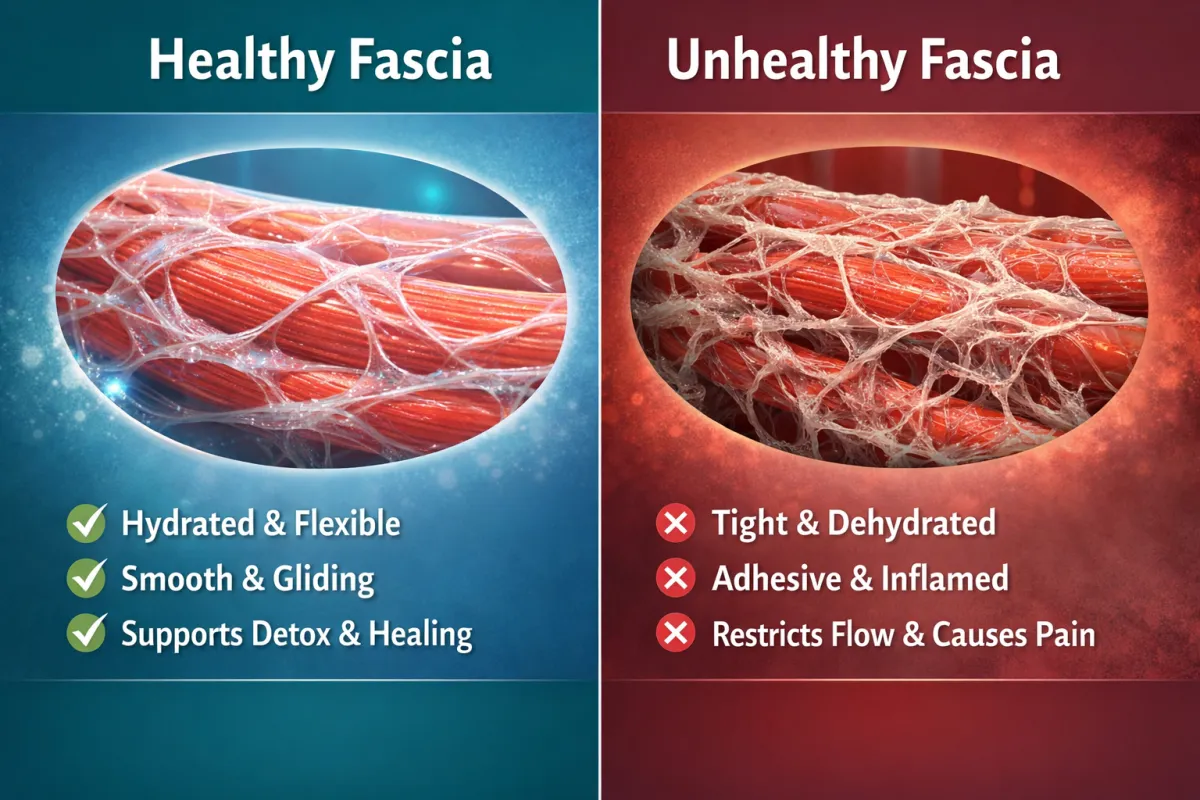
The body responds by tightening fascia as a protective mechanism.
This tightening:
-Reduces the movement of lymph and fluids
-Impairs detoxification
-Increases pain sensitivity
-Keeps the nervous system in a state of threat
Over time, fascia can become inflamed, dehydrated, and congested, making healing feel slow or impossible.
Fascia and Detox: Why “More” Isn’t Better
Fascia houses lymphatic vessels and is a major pathway for moving toxins out of the body.
When fascia is restricted:
Detox pathways don’t drain well
Binders and antimicrobials can increase symptoms
Clients become reactive to even gentle supplements
Pain and neurological symptoms increase
This is why many people with CIRS feel worse when detox is pushed too aggressively.
Detox works best when the body feels safe enough to release.
Signs Your Fascia May Need Support
Many CIRS clients experience signs of fascial restriction long before labs improve.
Common Physical Signs:
-Widespread pain without a clear injury
-Morning stiffness or feeling “locked up”
-Pain that moves around the body
-Neck, jaw, rib, or pelvic tightness
-Burning, pulling, or pressure sensations
-Limited range of motion
-Tender points rather than classic muscle knots
-Nervous System Clues
-Feeling worse with detox or binders
-Hypersensitivity to supplements
-Exaggerated reactions to exercise or bodywork
-Feeling “stuck” despite doing everything right
-Temporary relief from gentle movement but flares with intensity
These are signs the body needs more support, not more force.
How to Support Fascia Gently in CIRS
1. Regulate the Nervous System First
Fascia responds to safety.
Helpful practices include:
-Slow nasal breathing
-Longer exhales
-Humming, chanting, or gentle vocalization
-Somatic practices and body awareness
-Gentle prayer or contemplative stillness
When the nervous system calms, fascia softens.
2. Hydrate the Tissues
Fascia is mostly water. Dehydration,
even mild, makes it stiff and less elastic.
Support includes:
-Mineral-rich fluids
-Electrolytes (as tolerated)
-Avoiding excessive caffeine or diuretics
3. Gentle, Consistent Movement
Aggressive stretching often backfires in CIRS.
Better options:
-Walking
-Slow functional movement
-Qi Gong or Tai Chi
-Gentle yoga
-Micro-movements throughout the day
-Consistency matters more than intensity.
4. Choose Gentle Bodywork
Deep or painful bodywork can trigger inflammation and flares.
More supportive options:
-Gentle myofascial release
-Craniosacral therapy
-Visceral manipulation
-Lymphatic drainage massage
-Rebounding
-Gentle foam rolling
-Self-massage with hands or a soft tool
Pain is not required for healing.
5. Reduce Inflammation
Inflamed fascia cannot relax.
A proper diet can help repair damaged connective tissue and enhance elasticity.
-Omega-3 fatty acid-rich foods- wild-caught salmon, walnuts, and flax seeds
-Bone broth and collagen peptides – Rich in amino acids to rebuild fascia.
-Magnesium-rich foods (dark leafy greens, nuts, seeds) – Help relax fascia and prevent tightness.
-Vitamin C-rich foods like oranges and kiwi are essential for collagen production
6. Address Emotional and Protective Holding
Fascia often holds patterns from chronic stress, illness, and trauma.
Helpful supports:
-Trauma-informed care
-Somatic therapies
-Emotional processing
-Compassionate self-awareness
Healing accelerates when the body no longer feels the need to protect.
When fascia is supported, detox becomes easier, symptoms calm, and the body can finally shift toward repair.
By Heather Sunderland 12/22/25
References
Schleip R, Findley TW, Chaitow L, Huijing P. Fascia: The Tensional Network of the Human Body. Elsevier; 2012.
Porges SW. The Polyvagal Theory: Neurophysiological Foundations of Emotions, Attachment, Communication, and Self-Regulation. Norton; 2011
Shoemaker RC, et al. “Chronic inflammatory response syndrome: a review of the evidence.” Neurotoxicology and Teratology. 2010.
Stecco C, et al. “Fascial components of the myofascial pain syndrome.” Current Pain and Headache Reports. 2013
Pollack GH. The Fourth Phase of Water: Beyond Solid, Liquid, and Vapor. Ebner & Sons; 2013.
Langevin HM, et al. “Relationship of acupuncture points and meridians to connective tissue planes.” Anatomical Record. 2002.
Theoharides TC, et al. “Mast cells and inflammation.” Biochimica et Biophysica Acta. 2012.
